
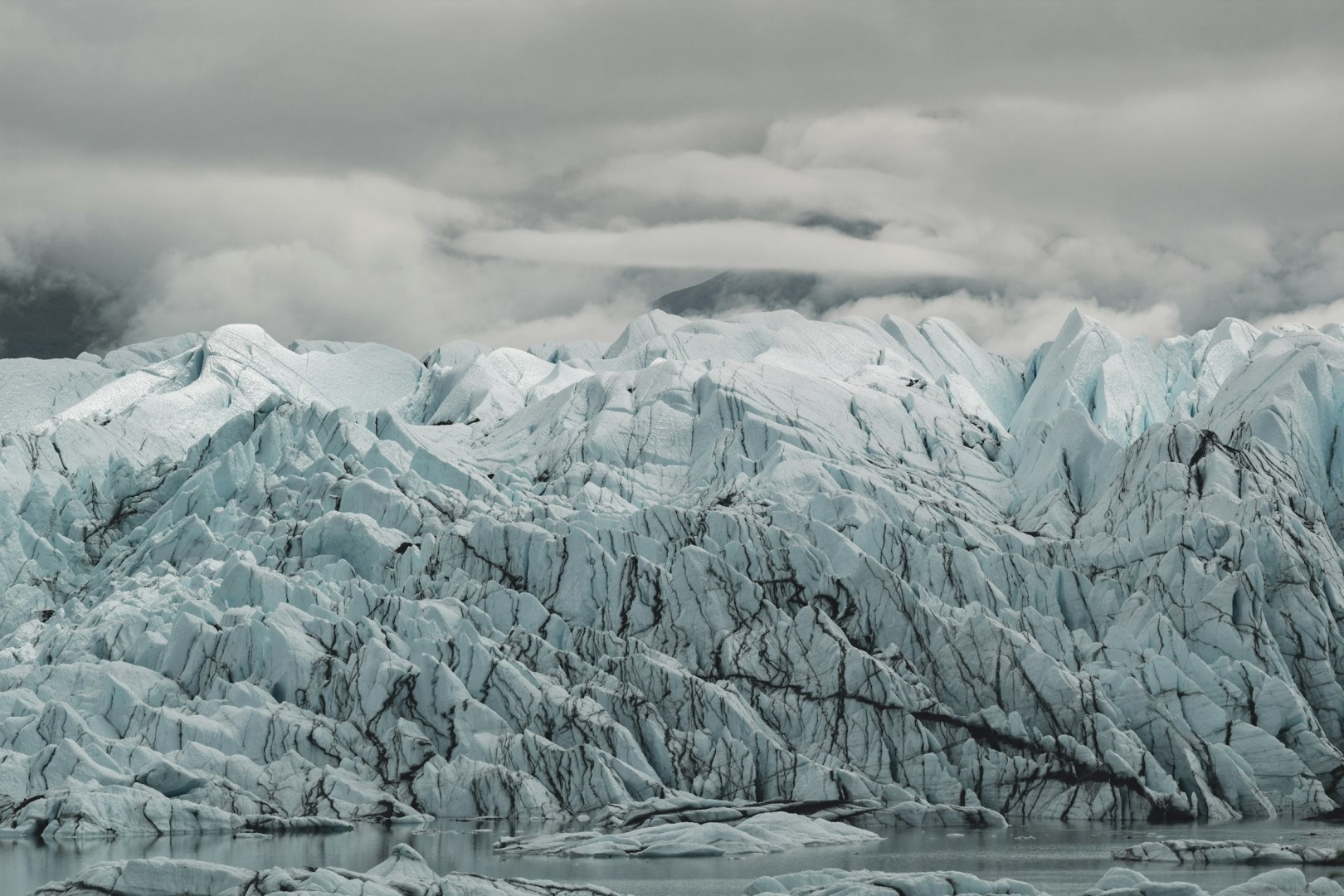
Matanuska Glacier is one of Alaska’s largest road-accessible glaciers, flowing through the Matanuska Valley northeast of Anchorage. The glacier stretches for roughly 27 miles and descends from the Chugach Mountains toward the valley floor, where its broad ice surface is bordered by steep mountain slopes and rocky terrain. The Glenn Highway follows the Matanuska River valley and provides access to viewpoints and guided glacier tours. Unlike many remote Alaskan glaciers, Matanuska Glacier can be reached by road, making it a well-known destination for visitors exploring south-central Alaska.
The Matanuska Valley lies within the traditional lands of the Ahtna Athabascan people, who have long used the region’s rivers, forests, mountains, and valleys for travel, hunting, fishing, and gathering. The Matanuska River and surrounding valley remain important parts of the area’s cultural landscape. Nearby communities developed through a mixture of Indigenous, agricultural, mining, and transportation traditions. The glacier itself is part of a landscape that has shaped local geography and travel routes, while the surrounding valley supports farms and communities despite its northern climate.
The glacier’s exposed ice provides a close view of glacial features such as crevasses, blue ice, meltwater streams, ice caves, and rocky debris carried within the glacier. Guided walks allow visitors to travel onto the ice, where crampons and other equipment are commonly used. The surrounding Matanuska Valley contains forested slopes, braided streams, and rugged mountain peaks, while nearby attractions include the Matanuska River and the Glenn Highway National Scenic Byway. Wildlife in the wider region includes moose, black and brown bears, Dall sheep, and bald eagles, although sightings are not guaranteed.
Food associated with the Matanuska Valley reflects both Alaska’s wild resources and its unusual agricultural potential. The valley is known for farms producing vegetables, berries, and other crops during its long summer daylight period, while salmon, moose, and wild berries are important regional foods. Local markets and farm stands offer seasonal produce when available. A distinctive feature of Matanuska Glacier is its accessibility: its terminus can be reached from the Glenn Highway without a flight or long wilderness expedition. This allows visitors to experience active glacial terrain while remaining close to one of south-central Alaska’s main road corridors.
Other Popular Destinations in Alaska

