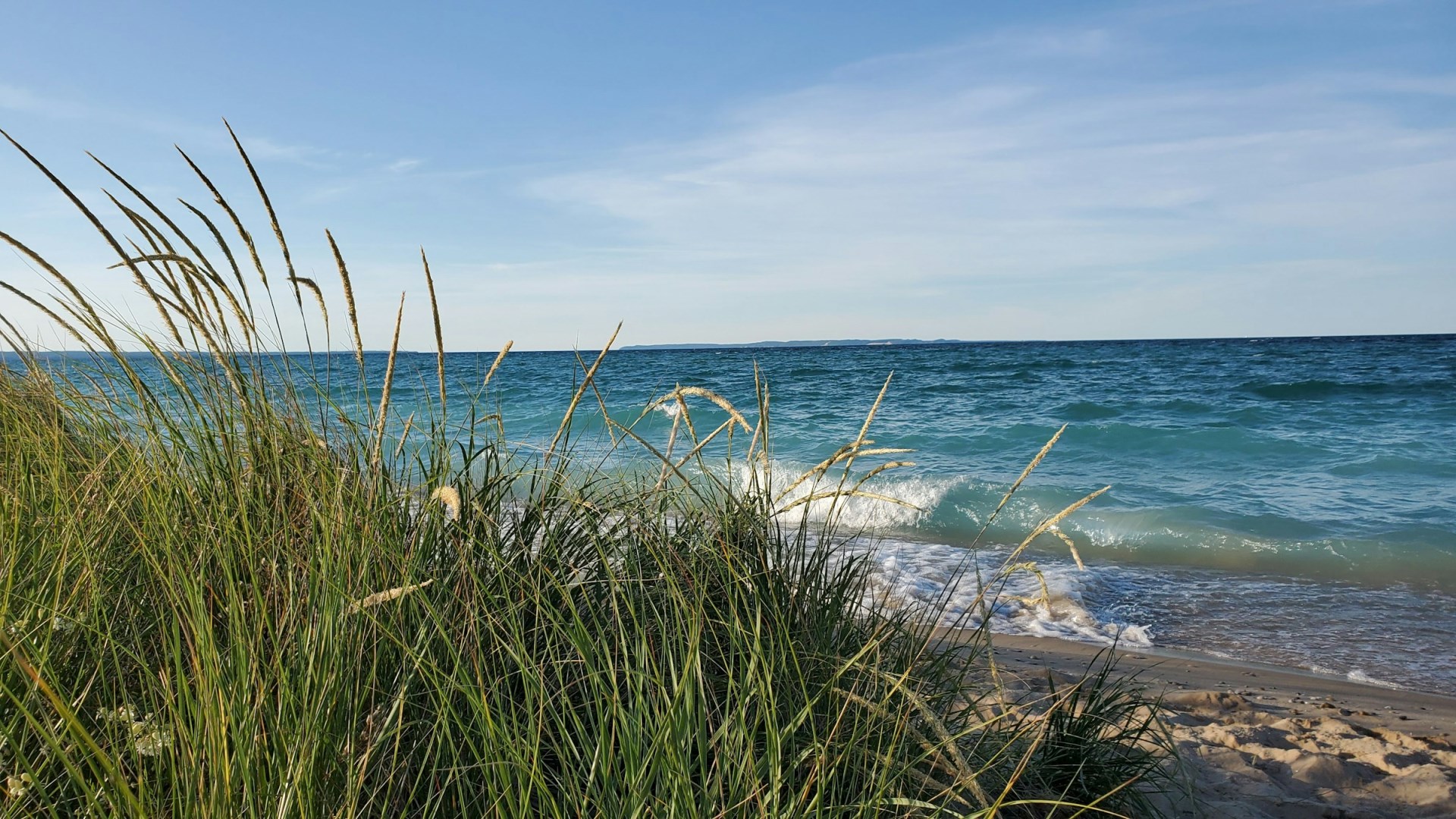
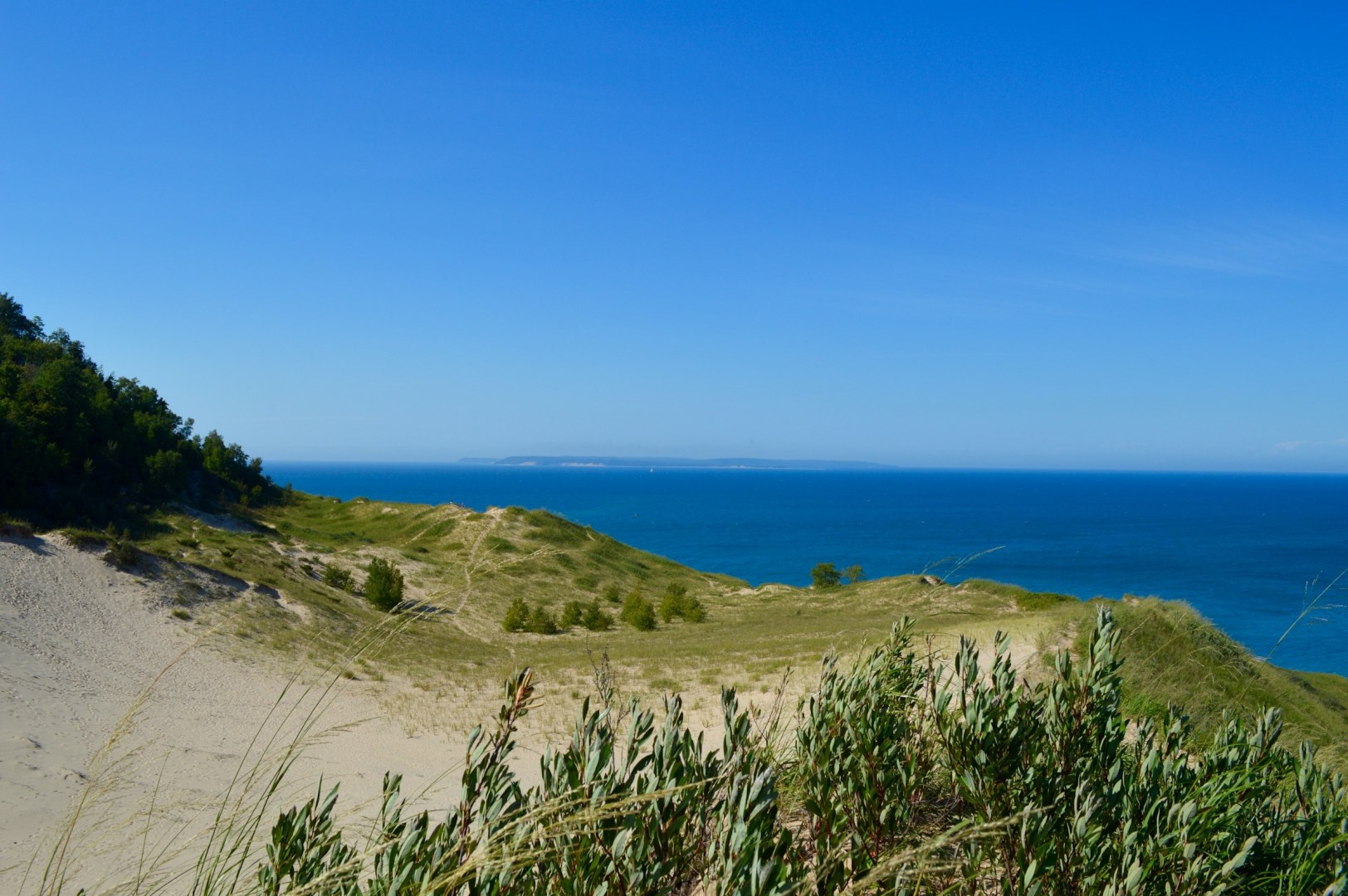
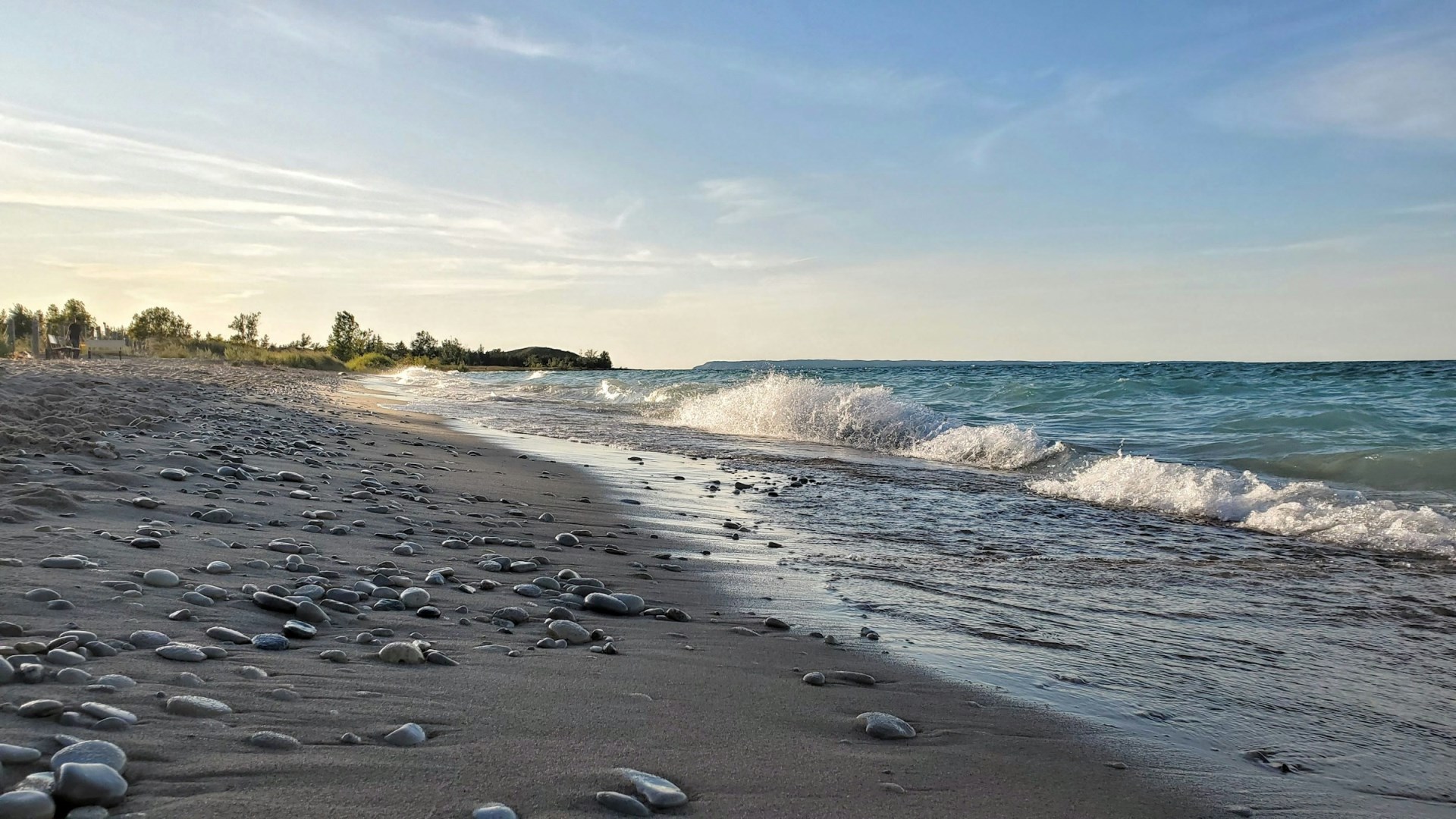

Sleeping Bear Dunes National Lakeshore occupies a long stretch of northwestern Michigan’s Lower Peninsula along Lake Michigan, protecting towering dunes, sandy beaches, forests, inland lakes, and steep coastal bluffs. The protected area extends across the Leelanau and Benzie county region and includes the Manitou Islands offshore. Its most recognizable feature is the Sleeping Bear Dune, which rises high above Lake Michigan and the surrounding landscape. The shoreline faces the open lake, while inland areas contain forests of pine, beech, maple, and hemlock, creating a varied landscape shaped by wind, water, and glacial deposits.
The area has deep connections to Anishinaabe peoples, particularly the Odawa and Ojibwe, whose cultural traditions include longstanding relationships with the Great Lakes and surrounding forests. Later communities developed around fishing, farming, logging, and maritime transportation. Historic settlements such as Glen Haven preserve evidence of these industries, including a former general store, blacksmith shop, and maritime facilities. The Sleeping Bear Point Coast Guard Station reflects the dangers of Great Lakes navigation and the work of crews who assisted vessels along the coast. The region’s name is associated with an Anishinaabe story involving a mother bear and her cubs.
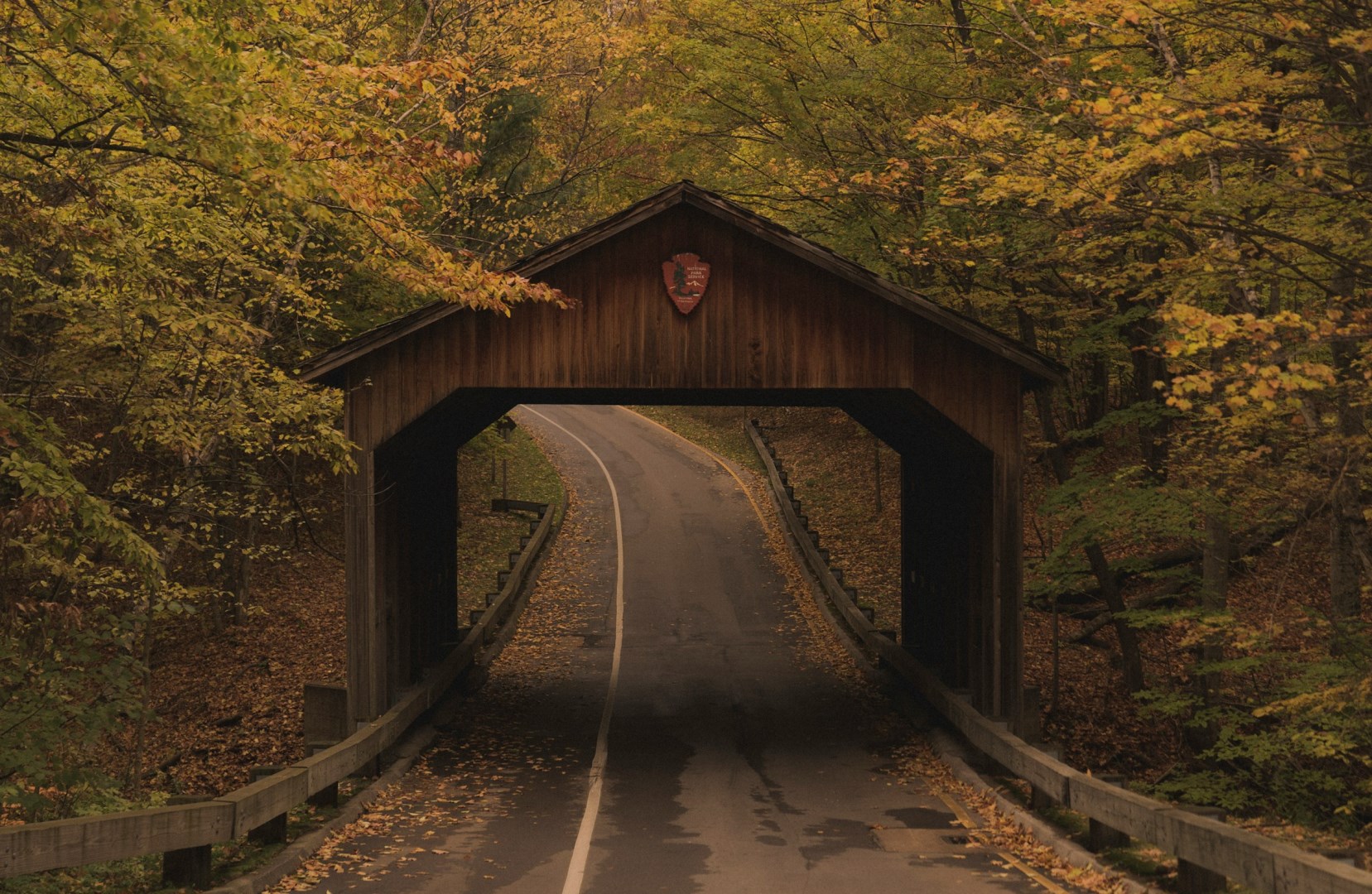
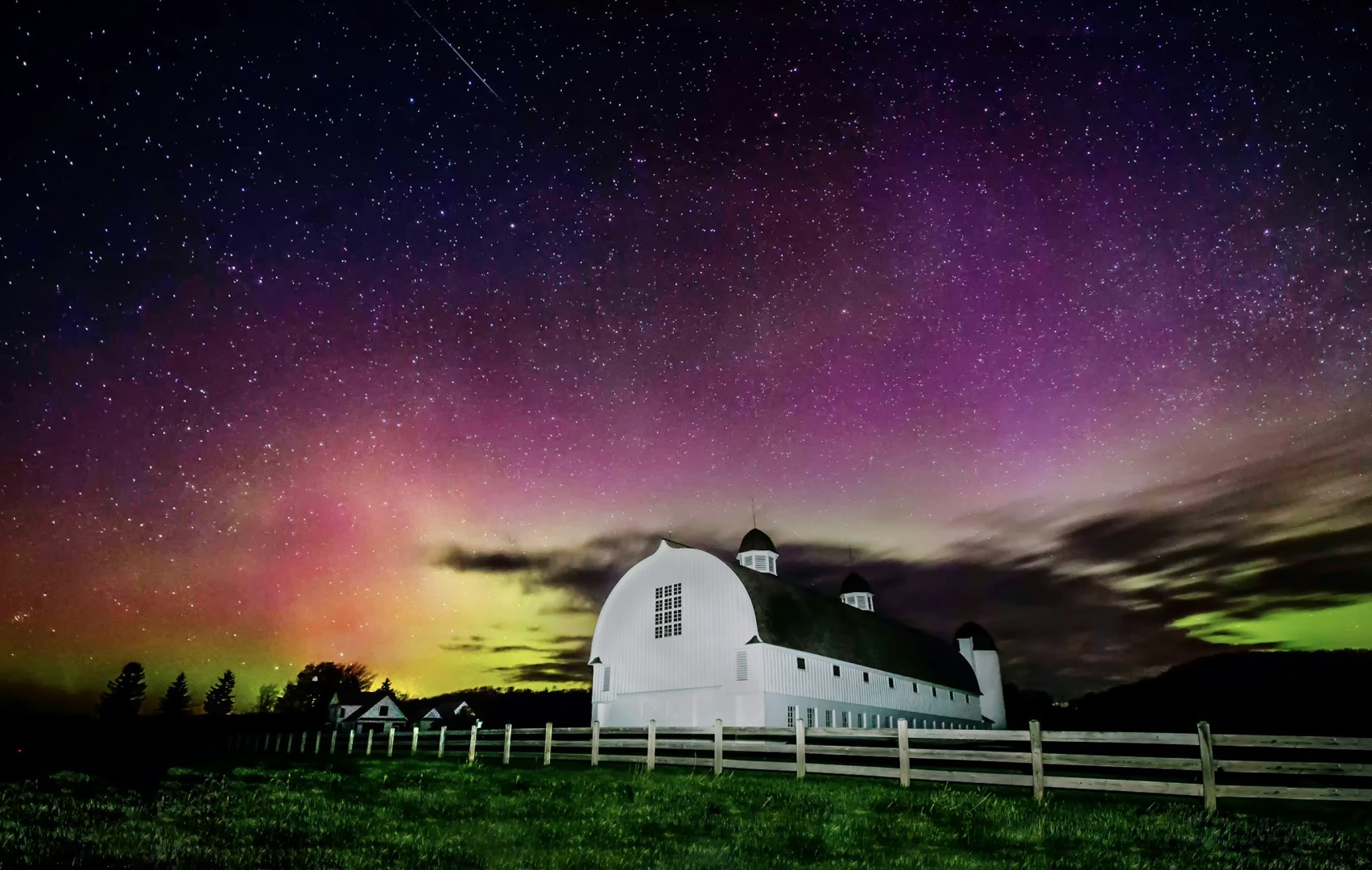
The lakeshore contains a wide range of natural attractions. The Pierce Stocking Scenic Drive climbs through forest and dune country before reaching overlooks above Lake Michigan, while the Dune Climb provides direct access to the sandy slopes. Empire Bluff Trail leads through woodland to a high overlook above the lake, and the Alligator Hill area offers additional hiking through forests and former farmland. Glen Lake and Little Glen Lake sit between the mainland and the dunes, while Platte River and the Manitou Islands add further opportunities for paddling, hiking, and wildlife observation. Historic Glen Haven and the Port Oneida Rural Historic District preserve aspects of the area’s agricultural and maritime past.
Food traditions around Sleeping Bear Dunes reflect northern Michigan’s agricultural and Great Lakes setting. Cherries, apples, blueberries, and other fruit are widely grown in the surrounding counties, while whitefish, lake trout, and other freshwater fish are common regional foods. Local farms and orchards supply seasonal produce, baked goods, cider, and other products to communities around the lakeshore. One distinctive feature of the area is the contrast between its enormous mobile dunes and the relatively fertile agricultural land immediately inland. The combination of freshwater beaches, forest, orchards, historic farms, and high dunes gives Sleeping Bear Dunes a landscape that changes noticeably over short distances.